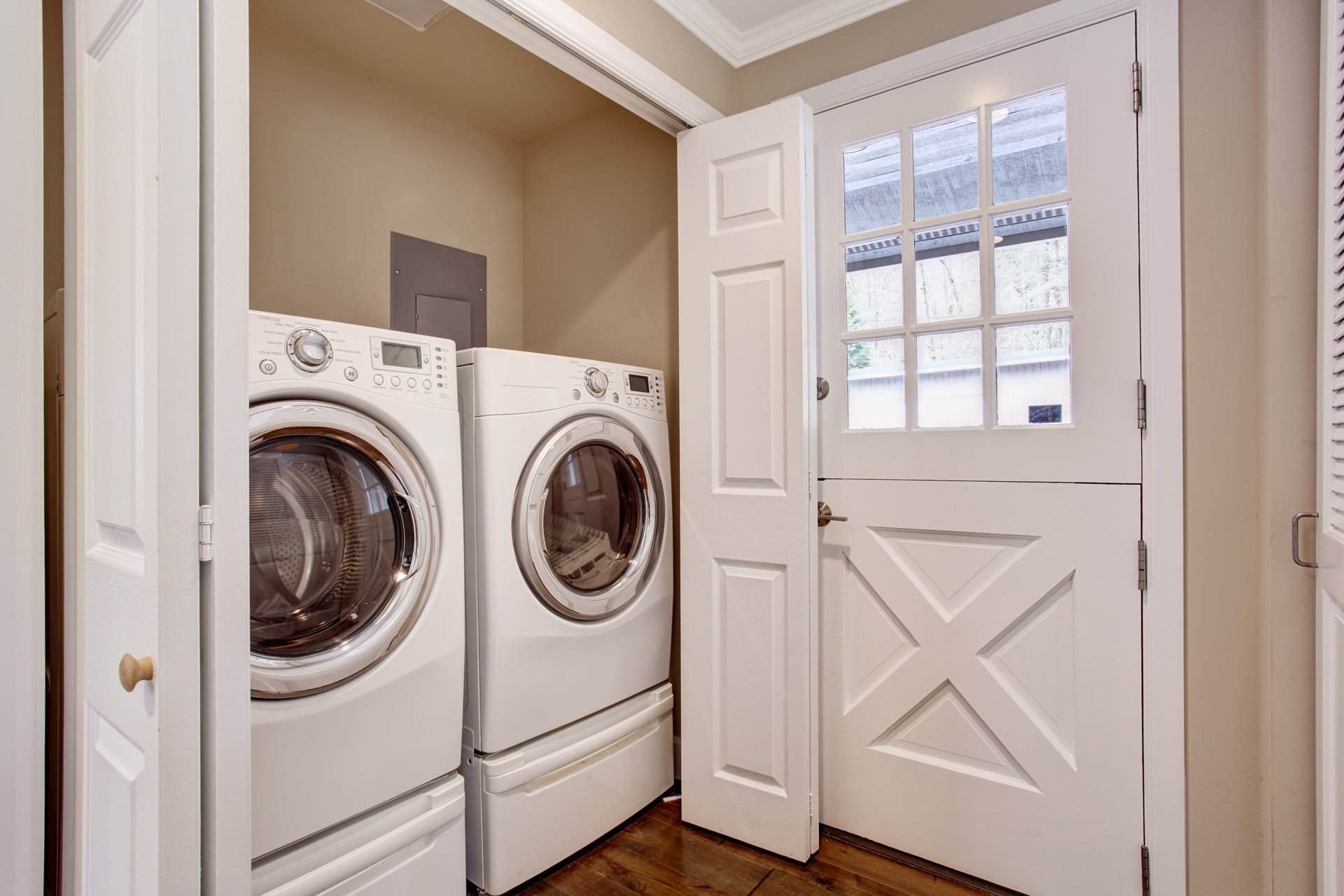
When Your Washer Stops, Everything Stops
A family of four generates roughly 50 pounds of laundry per week. When that washing machine breaks down on a Tuesday, by Thursday you're hauling garbage bags to the laundromat and losing your evening. I've seen it hundreds of times and I get the urgency.
Washing machines are simultaneously simple and complex. The basic idea hasn't changed in a century: agitate clothes in soapy water, rinse, spin out the water. But modern washers do this with electronic control boards, pressure sensors, motor inverters, and drain pumps that are nothing like the belt-driven machines I started working on in 1981. I've watched this technology evolve year by year, and I understand both the old mechanical washers that some of you still have and the new high-efficiency models that seem to throw error codes for no reason.
Most washer repairs are first-visit fixes because I carry the parts that fail most often: lid switches, door latches, drain pumps, drive belts, water inlet valves, and control boards for the popular Whirlpool, Maytag, and LG platforms.
Washing Machine Problems I Solve Daily
Won't Spin or Agitate
Top-loaders with a dead spin cycle usually have a worn coupler, broken drive belt, or failed lid switch. Front-loaders that won't spin often have a bad door latch or a motor control board issue. I test the mechanical and electrical paths to find the real failure.
Won't Drain
Standing water in the drum usually means a clogged drain pump or a kinked drain hose. I've pulled coins, bobby pins, socks, and once a baby spoon out of drain pumps. Sometimes it's the pump motor itself, which I can replace in under an hour.
Leaking Water
Leaks during fill are usually a supply hose or water inlet valve. Leaks during the wash cycle point to the door boot seal on front-loaders or the tub seal on top-loaders. Leaks during drain are pump-related. Where the leak happens in the cycle tells me where to look.
Excessive Vibration or Walking
A washer that walks across the floor during spin is either overloaded, out of level, or has worn shock absorbers or suspension springs. Front-loaders are especially prone to this when the concrete counterweight bolts loosen. I fix the root cause, not just re-level it.
Error Codes
Modern washers communicate through error codes. Each brand uses a different system. I know how to enter diagnostic mode on every major brand and I understand what those codes actually mean beyond what the manual says. Sometimes the code points to a sensor that's fine — the wiring harness is the real problem.
My Approach to Washer Diagnosis
I ask you to describe what happened and when in the wash cycle it happened. A washer that fills but won't agitate is a completely different problem from one that agitates but won't spin. A leak during fill means something different than a leak during drain. These details save time and save you money.
I run the washer through its diagnostic cycle while I watch and listen. I check water pressure at the inlet valves, test the lid switch or door latch continuity, and measure motor resistance. On electronic models, I pull up stored error codes and cross-reference them against the actual sensor readings. I don't replace a pressure sensor just because the code says to — sometimes it's a pinched air tube, which is a $0 fix.
Keep Your Washer Healthy
- Don't overload it: An overloaded washer strains the motor, wears the drive components faster, and doesn't actually clean your clothes well. Fill the drum about three-quarters full.
- Use HE detergent in HE washers: Regular detergent in a high-efficiency washer creates excess suds that confuse the sensors, leave residue, and can trigger error codes. If your washer says HE, use HE soap.
- Leave the door open after washing: Front-loaders trap moisture in the door boot seal, which breeds mold and that musty smell everyone complains about. Leave the door cracked for an hour after each load.
- Clean the drain pump filter monthly: Most front-loaders have an access panel at the bottom front for the drain pump filter. Open it, put a towel down, and clean out whatever's trapped. You'll prevent drain failures and bad odors.
- Check supply hoses annually: Rubber supply hoses crack and burst without warning. If yours are more than five years old, replace them with braided stainless steel hoses. A burst hose while you're at work means hundreds of gallons of water on your floor.
Repair vs. Replace — My Honest Take
Washing machines generally last 10 to 14 years. If yours is under 8 years old and the repair is less than half the cost of a new one, repair it every time. If it's a 15-year-old machine on its third major fix, I'll tell you straight: put the repair money toward a replacement.
I don't benefit from steering you either way. I charge the same diagnostic fee regardless of your decision. My job is to give you an accurate picture so you can make a smart choice.